


Two weeks ago I was alerted to the existence of a 30-minute video that a former co-worker had posted about me on YouTube.
How do I know it’s about me?
Well, my name is in the title.
It also includes an analysis of a few specific things I’ve written, my words displayed and occasionally highlighted in a split-screen format. There’s also a literal receipt. He shows proof of a $5 refund I provided three years ago for a subscription he’d purchased to my personal newsletter.
Watching the video was an unnerving experience. There are two points, specifically, where he cursed at me while speaking directly to the camera.
Over the past two weeks, I’ve spent entirely too much thinking about this. While doing so, I realized that this incident offered a different perspective on the topic I’ve been exploring here.
I’ve written an awful lot about the grudges I’ve held, the impact that’s had and the steps I’ve taken to let go.
In this case, it would appear there’s a grudge being held against me, and I’m faced with a decision of what – if anything – I should do about it.
⚠️ A disclaimer ⚠️
I’m going to link to the video here. Before I do, I want to be explicit: I do not want anyone reading this to comment on it or interact with my former co-worker in any way.
While his name isn’t on the YouTube account, his identity is not a secret. I’m not interested in a critique of his opinions, his presentation or his motivation. In fact, I’m explicitly asking you not share those.
I am writing about how I am working my way through this emotionally fraught situation, and while you’re free to critique my actions or my own approach, I do not want that scrutiny applied to him. For my part, I’m going to try my best not to be judgmental of my former co-worker.
OK. Here’s the video:
📖 The backstory
I joined 710 ESPN Seattle as a full-time radio host in spring 2013, leaving my job covering the Seahawks for The Seattle Times. I was paired with Brock Huard on a show that aired 9 to noon on weekdays. The guy who made the video above was the producer of that show, a role he’d held for two years before I started.
As a producer, he was responsible for arranging interviews and organizing the show, and while he wasn’t a host, he was free to interject on-air.
I worked with him on a daily basis for about a year. We were never part of the same show after that. His contract with the station was terminated in 2020. I left the station the following year.
I last spoke to him three years ago. I called because I had noticed he was arguing with another subscriber in the comment section of my personal newsletter. I thought a personal phone call was the most respectful way to try and establish boundaries. He said I was reprimanding him. We have not spoken since that day.
Two weeks ago, a former colleague of ours who is still at the station, alerted me to the video, and while something on YouTube isn’t exactly the most pressing issue in our world, it does strike me as something that is unique to this particular era of human history.
⚖️ Specific objections
In the video, he points to three specific things that I did:
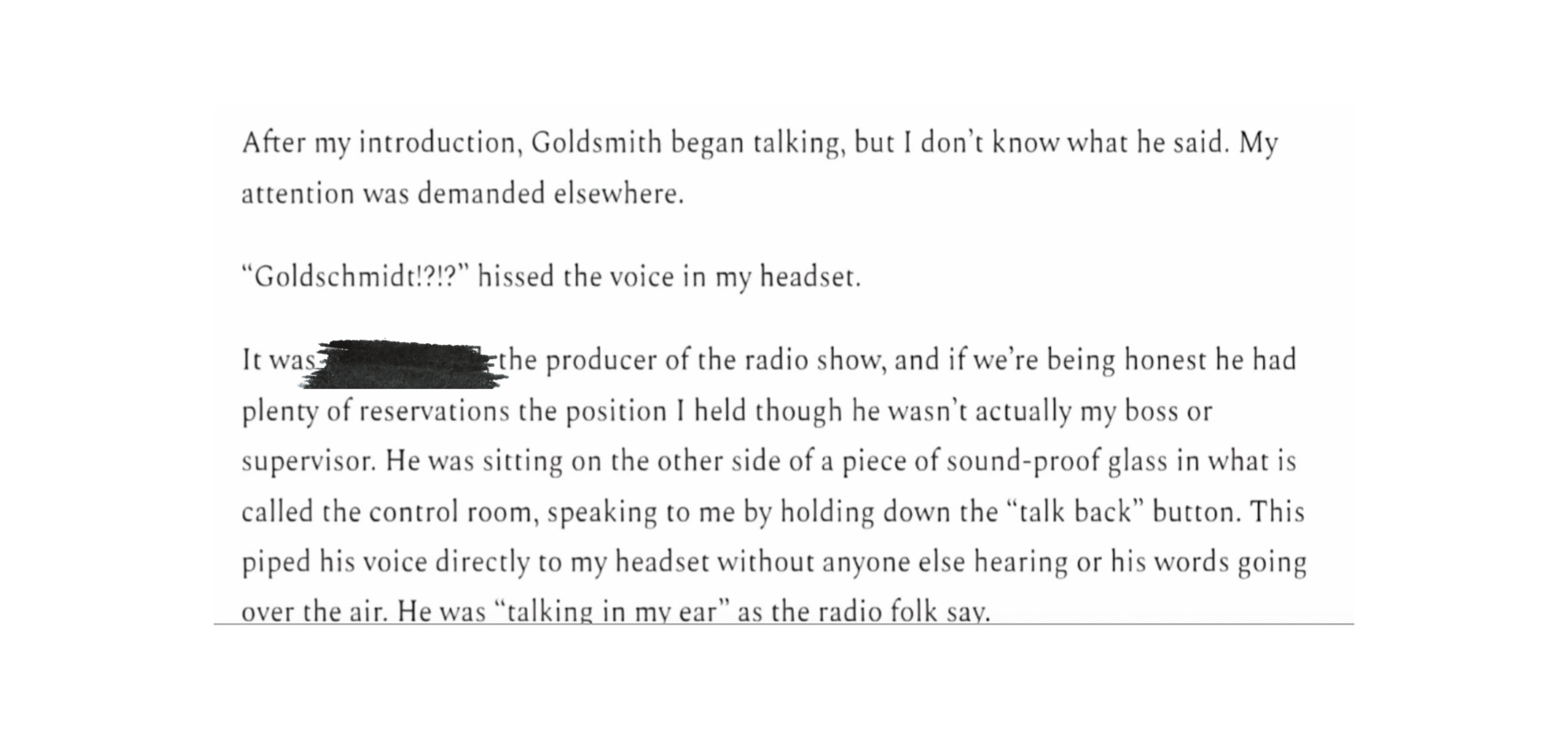
He believes I characterized him as a villain in an essay I wrote about my worst day in radio. That essay was first published in December 2022 on my newsletter, The Dang Apostrophe. A later version was published in Seattle magazine. Here’s the text from the initial newsletter essay:
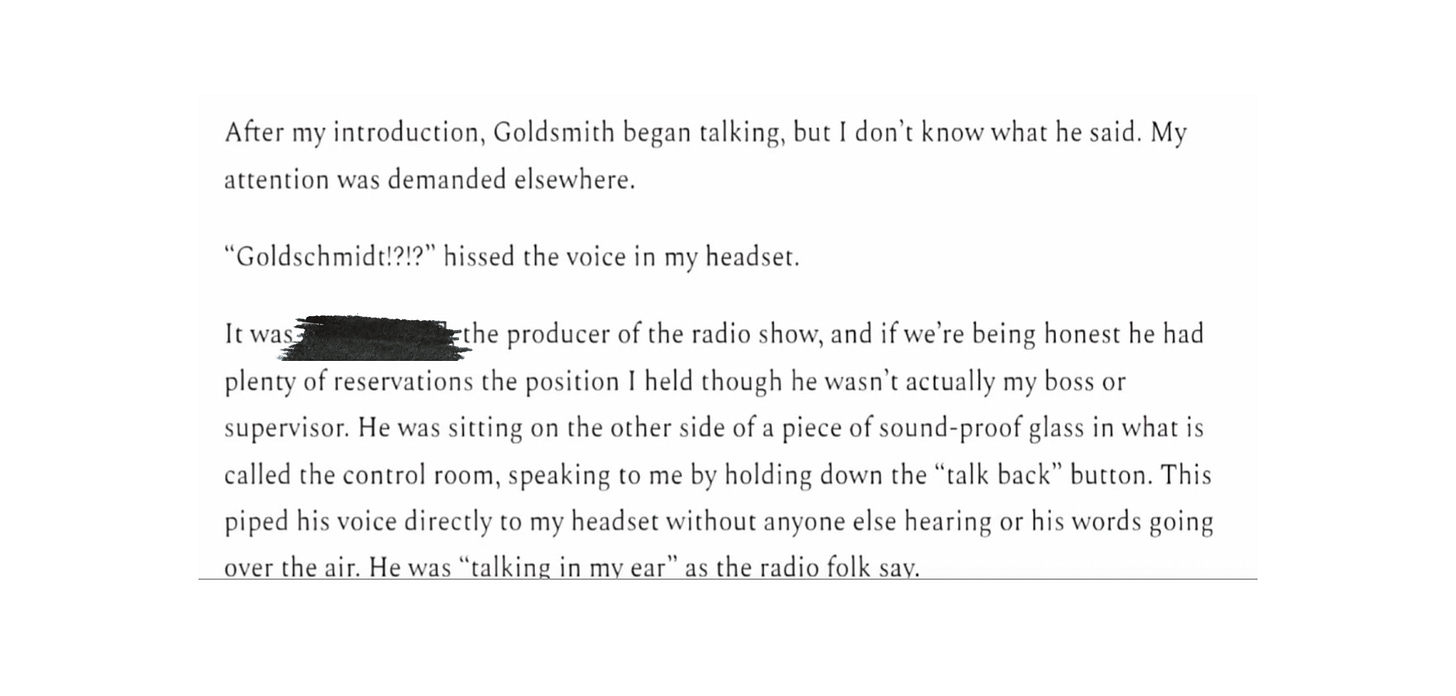
Several months after the essay was published on my newsletter, I noticed that there was an argument going on in the comments. I realized that my former co-worker was arguing with another subscriber. I called him on the phone. My plan was to respectfully ask that he not argue in the comments of my articles. He felt I was reprimanding him. The conversation did not go well. I asked him not to comment any more and refunded his subscription.
Last year, I was asked on Twitter if I thought this producer would have been a good fit on “Danny, Dave and Moore” which is the show I hosted on from 2014 through 2019. I responded: “Depends on what era of (the producer) we’re talking about. He became increasingly volatile.”
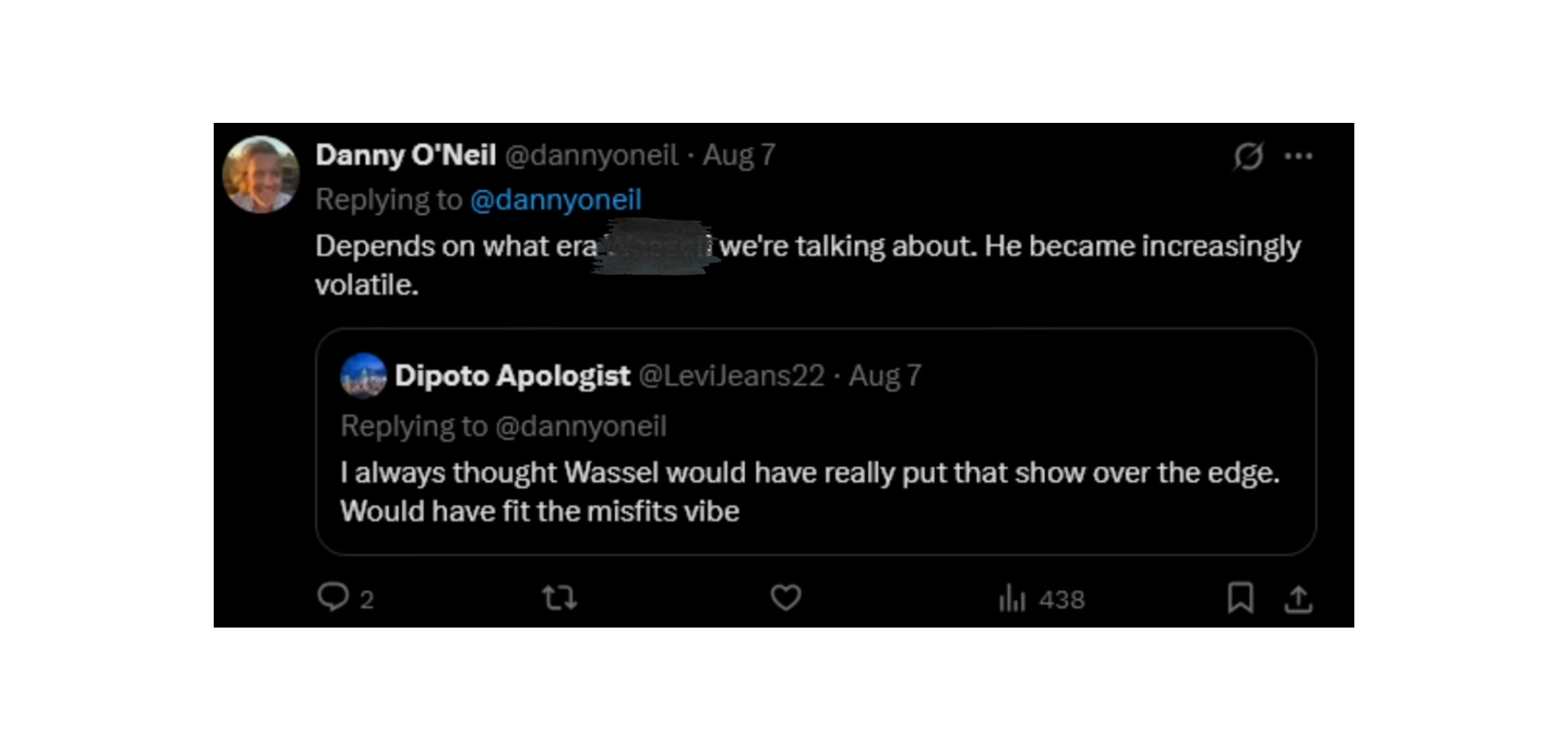
Those are the triggers he identified, but he was also pretty clear about what he found most bothersome:
“I don’t know if you’ve gone out of your way to trash everybody post-exit. Maybe. But the fact that you can’t find one fucking thing nice to say about me is fucking hurtful. Like what the hell is your problem? What did I do to you?”
This is the point in the newsletter where I could react to the issues he brought up.
And if I was writing this as a response to the video, this is where I would do that.
But I’m not writing a response to what he said.
I’m writing about what — if anything — I should do in response.
That requires me to balance what I’m feeling (i.e. what I want to do) with some real-world pragmatism about the potential results of the different approaches I could take.
🛋️ Welcome to my psychologist’s office
Initially, I felt a certain amount of disbelief not just at the content and style of the video, but the fact I was being singled out.
I was not involved in any way with his departure from the radio station. Not the events that led up to it. Not the events that followed.
While our last conversation had not gone well, I didn’t realize how much antagonism he felt toward me specifically until I saw the video.
I was mad at what he said, and a little bit scared. I certainly didn’t think I was attacking him in the essay I wrote nor in my Twitter comment, but even if I had been, his response struck me as disproportionate. He addressed me as an “unforgiving little prick” and rhetorically asked, “Who the fuck do you think you are?”
Finally, I didn’t think the way he characterized the situation was entirely accurate. At the very least, I have a significantly different perspective on what occurred.
Even as I’m writing this, I can feel the visceral pull to defend myself. To push back against what he said, and that is absolutely what I wanted to do.
It is the approach that I have taken in the past.
That’s why I know better than to act on this impulse. I’ve learned from experience that a response is more likely to escalate the issue than resolve it.
A response is also more likely to draw attention.
While an online spat between two former Seattle radio personalities isn’t exactly big news, it will probably attract some onlookers who will inject their own opinions about either the issue or the individuals involved.
That’s not the outcome I want.
So I should just ignore it, right?
That’s the most common advice I’ve received not just about this situation, but any antagonism I’ve faced online. Don’t feed the trolls. It only matters if you let it.
There is some validity to this, especially on the Internet where directing attention toward conflict is like feeding oxygen to a flame.
By saying nothing, I would let his antagonism just hang there with nowhere to go.
There are two downsides I see, though:
I don’t get the emotional release that comes with speaking up for myself;
He might continue to stew, maybe even get angrier if the issue isn’t addressed. While the issues I had with my stepfather are not at all analogous to this situation, at the heart of my grudge against him was the anger I felt at the fact he never talked about what happened.
That brings me to the third option: a more conciliatory approach.
I could acknowledge the objections he has made, and while I didn’t intend to cast him as a villain, I can recognize the pain my words have caused him.
I’ll be transparent now: This is the least appealing option to me from an emotional standpoint. It feels passive, weak. Furthermore, it feels like something that has been a tendency of mine.
I can be overly accommodating. I can over apologize. I can be hesitant to draw hard boundaries on what I’m willing to do, and this can lead to situations where I make myself miserable by fulfilling the commitments I’ve been asked to take on.
If I keep following this line of thinking I’ll talk myself into the idea that I absolutely should stand up to this former co-worker who made this video about me. If I work at it, I can become convinced it’s a matter of principle.
But if I take a beat, press pause on that inner-monologue, and take a few deep breaths I can find the room to be a little less emotional, a little more pragmatic.
This situation is not necessarily a microcosm of my life. In fact, if I look at it with a more discerning eye, it doesn’t have all that much to do with the things that I have a tendency to struggle with.
This is not a person I’ve spent years accommodating nor is it someone I’ve had to tiptoe around. We don’t work together anymore, and while we were supportive of each other early in my time at the radio station, there has been significantly more distance over the last six years particularly.
What is the end result that I want here?
I don’t want this to be a conflict.
And while I can only control half the equation in that regard, I do have control over that half.
So I’m not going to object to what was posted about me. I’m not going to argue over the timeline or the characterizations. I’m not going to add any antagonism.
Instead, I’m going to address the things that upset him.
I wished that I hadn’t used his name in that essay I wrote about my worst day in radio. I regret that I used “hissed” to describe the sound of his voice in my headphones. I’m sorry I didn’t make it clear that I never, ever thought any of this was malicious. His response was a natural reaction to my honest mistake, and while the essay I wrote was intended to be about my own growth, I can see why he felt it was unfair to him. I’m sorry for how I wrote it.
I also regret the Twitter comment in which I described him as “increasingly volatile.” It was an off-handed remark and not something I thought was overly pejorative. I think there were times that I was “increasingly volatile” while working at the radio station, but applying that label to him was entirely unnecessary and I can see why it bothered him. I’m sorry for posting it.
I was bummed to see the video. It bothers me to be blamed for the pain someone else is experiencing, and while my natural inclination was to defend my own actions by pointing to the purity of my intentions, I can see and hear that he feels like he was left hung out to dry.
That’s too bad. He has a great sense of humor, is a very talented musician and he shares my appreciation for the vocal cadences of the pro-wrestling manager Jim Cornette.
If I write about my former co-worker again, I’m going to be more respectful. I’m also going to keep an eye out for opportunities to mention positive memories because there certainly were some.
I don’t know how all of this is going to land, but that’s always the case when you’re trying to plot a course through emotionally fraught terrain.
Emotions shouldn’t be used as a compass in this sort of situation. It’s best to acknowledge them first, and then pick out the destination where you really want to end up.
It might take you a while to get there. I’ve been working on this particularly route for two weeks, but I think I’ve got my route plotted out. I’ll let you know how it goes.
Wassel was the weakest host of that era. Love you Danny!