


Revenge is often described as if it were an addictive substance.
You start off looking to settle a score. You end up obsessed with getting payback.
Or you own the most iconic sports franchise in America, and you develop a grudge against one of your best players that becomes so intense you wind up giving $40,000 to a degenerate gambler and getting yourself banned from Major League Baseball for the rest of your life. Or two years, whichever comes first.
We’ll get to George Steinbrenner in a second.
First, I must say I don’t entirely buy the idea that revenge is wildly addictive.
I think we, as a species, are predisposed to wanting payback. Social scientists have repeatedly demonstrated that, in general, humans tend to want to hurt people they believe have hurt them. This likely traces back to primitive times when our ancestors first began living in groups, and turning the other cheek was a recipe for getting your (stuff) stolen. From an evolutionary perspective, it was beneficial to make others think you were the wrong person to (mess) with.
However, most of us experience this desire for revenge without ever acting on it, let alone becoming an indiscriminately punitive maniac. Or if we do act on our resentment, we do so within the bounds of human decency or at least criminal law.
There are some people, though, whose behavior appears more compulsive. They become so fixated on making someone suffer that they behave in ways that ultimately boomerang back on them.
Which brings us to Steinbrenner. The Boss. Before he was a caricature (or a character on “Seinfeld”), he was the famously demanding owner of the baseball team that wears the pinstripes. He forbade players from sporting facial hair and seemed to relish public displays of authority.
He spent the 1980s becoming increasingly antagonistic toward David Winfield, who was one of his very best players. Even now, it’s hard to understand exactly what made Steinbrenner so determined to undermine Winfield.
And boy did he try to undermine Winfield.
“A decade of the worst years of my playing career,” Winfield said during an interview on “All The Smoke” with Matt Barnes. “You can’t tell by my performance … But there were some things, you’d stutter. You can’t imagine.”
It’s a hell of a story that includes three lawsuits, some thoroughly bombastic quotes, and an allegation that Steinbrenner paid a known gambler $40,000 for incriminating information on Winfield’s charity.
Characters
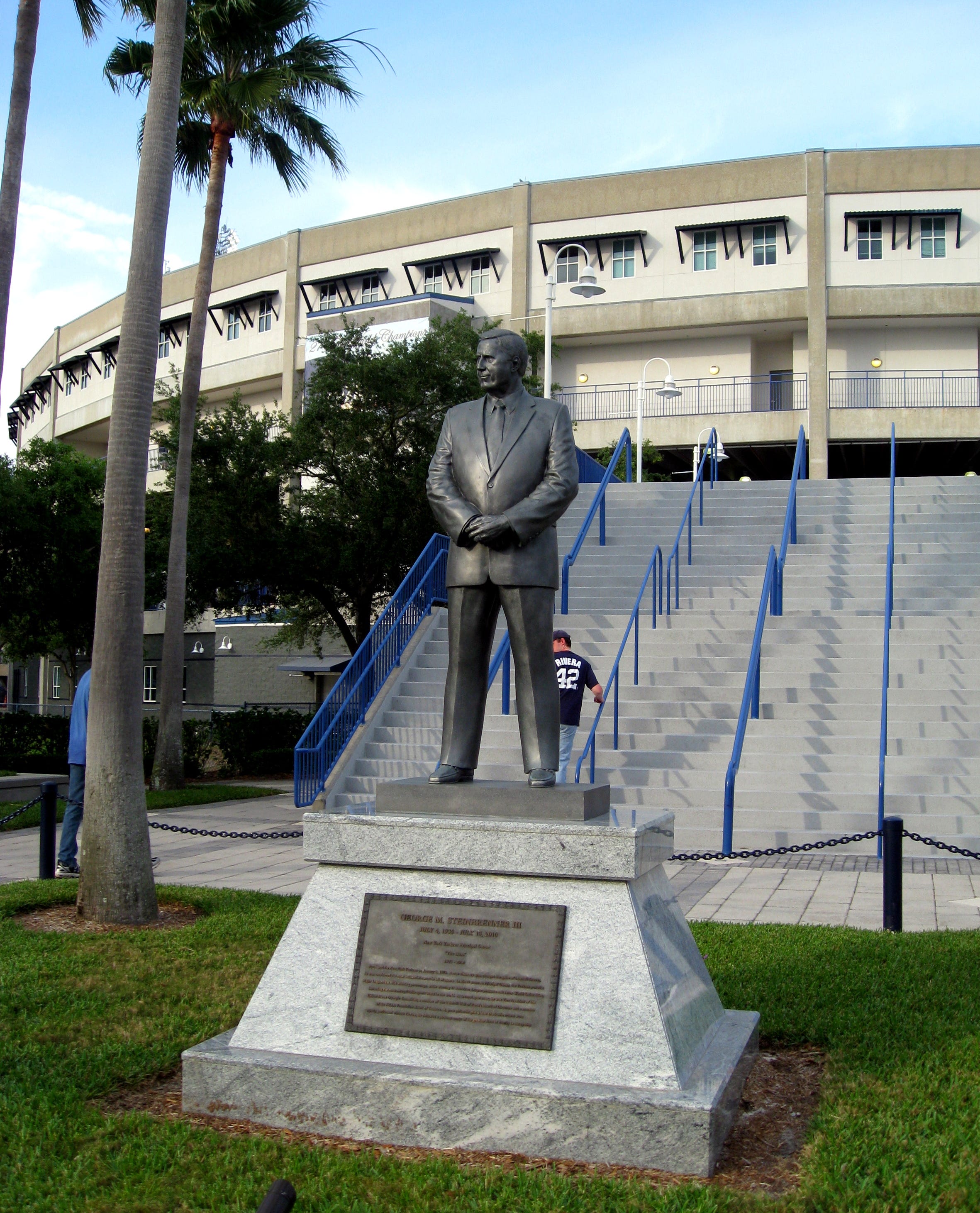
The grudgor: George Steinbrenner
A brassy, tough-talking boss who grew up in Ohio and worked in the shipping business. He came to New York in 1973 as the frontman for an investment group that bought the New York Yankees from CBS.
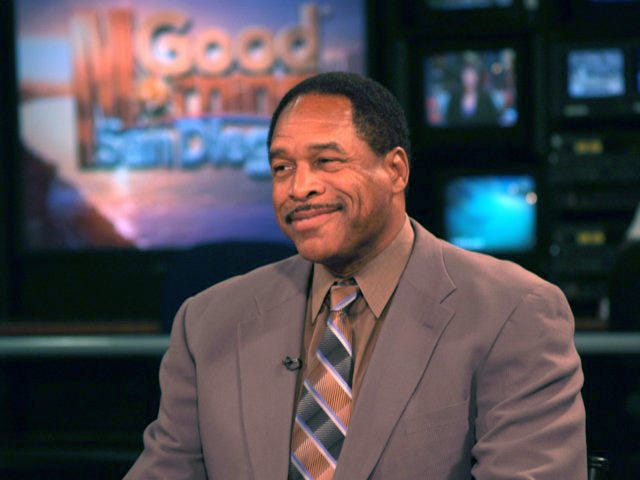
The grudgee: Dave Winfield
A 6-foot-6 tower of power and one of the very best American athletes of the 20th century. The Padres picked him No. 4 overall in the baseball draft coming out of the University of Minnesota. Winfield, who also played college basketball, was drafted in the NBA as well. The Vikings took him in the NFL Draft even though Winfield did not play college football.
The backstory
A four-time All-Star in San Diego, Winfield was the top free agent in baseball after the 1980 season.
The Yankees signed him to a 10-year contract that was then the richest in professional sports. The contract famously included a provision for cost-of-living increases, which Steinbrenner (reportedly) did not realize when the deal was signed.1
The contract also required Steinbrenner to donate $300,000 annually to Winfield’s charity.
The turning point
Winfield played great from the start in New York. He appeared in all but two of the team’s regular-season games in the strike-shortened 1981 season. He hit .350 with two doubles and a triple in the first round of the playoffs and made an iconic catch in the American League Championship Series, robbing a home run from Oakland’s Tony Armas.
But Winfield slumped through the World Series, getting just one hit – a single – in his 22 at-bats as the Dodgers beat the Yankees 4-2 in the series.
Steinbrenner did not take the loss well. After the Yankees lost Game 5 in Los Angeles, Steinbrenner said he became involved in a fight with two Dodgers fans in a hotel elevator. Steinbrenner said he broke his left hand in the tussle.
Following the World Series, Steinbrenner publicly apologized for his team’s performance in the World Series.
The grudge
Over the course of the 1980s, Steinbrenner became increasingly combative toward his star player.
He repeatedly failed to make the annual donation to Winfield’s charity. Winfield’s foundation filed suit against Steinbrenner three different times: 1982, 1983, and 1989.
In 1982, Steinbrenner told reporters Winfield “isn’t a winner, the way Reggie Jackson was. Winfield can’t carry a team.”
In 1985, in the midst of an important loss to Toronto, Steinbrenner asked the reporters in the press box, “Does anyone know where I can find Reggie Jackson? I let Mr. October get away, and I got Mr. May Dave Winfield. He gets his numbers when it doesn’t count.”
The situation deteriorated from there.
Following the 1985 season, Winfield had sufficient tenure to void any trade. He made it clear he intended to use that veto to stay with the Yankees.
After Winfield’s memoir “A Player’s Life” was published in 1986, Steinbrenner called his player a liar.
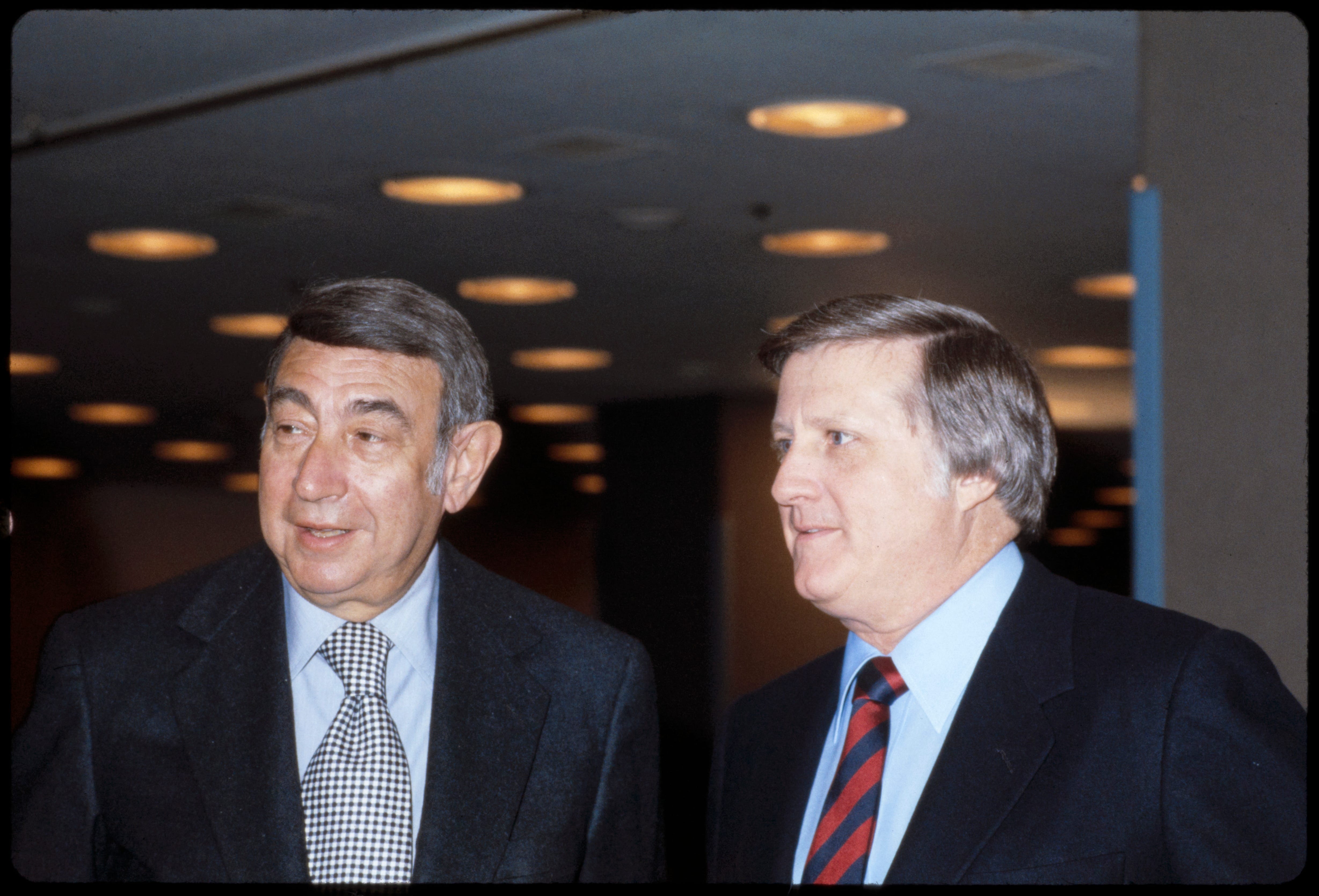
In 1988, Howard Cosell wrote a column stating the Yankees planned to sue Winfield for mismanagement of his own charity. Sports Illustrated dispatched E.M. Swift to cover the rising tensions between the Yankees owner and his star player.2
Swift interviewed Eric Swenson, a paid consultant for Winfield’s charity.
“Steinbrenner’s had auditors and lawyers combing our books for years,” Swenson said. “It’s a case of blind hatred. He’s trying to bring down David any way he can.”
Swift asked Winfield whether he thought Steinbrenner was responsible for Cosell’s article.
“If you can’t trade him, slime him,” Winfield said.
Now, let’s pause here before we get to the conclusion.
It is not uncommon for tension to arise between a player and the owner of the team he plays for. Obvious antagonism is less frequent, but not unheard of.
Usually, it relates to one of two things:
The player believes he is underpaid and resents the owner’s unwillingness to rectify this;
or
The owner believes the player is overpaid and resents him for insufficient performance.
The conflict between Steinbrenner and Winfield didn’t fit either category.
Winfield was certainly not a bargain, but he was a devastatingly effective hitter. He was very durable, too.
Yet from 1982 on, Steinbrenner was actively antagonistic toward one of the very best players on the team he owned.
I suppose it’s possible that Steinbrenner was using some hard-ass motivational technique in the belief that angering Winfield or making Winfield fearful would make him play better.
But I don’t think so.
I think that Steinbrenner became convinced Winfield had wronged him.
Perhaps it was the cost-of-living increase that was present in Winfield’s contract. Maybe it was the World Series slump in 1981, and Steinbrenner felt he was owed better performance. It could be that Winfield was simply a convenient scapegoat for Steinbrenner after the Yankees missed the playoffs each of Winfield’s final nine seasons with the team.
Whatever the reason, Steinbrenner was searching for ways to harm his employee, and now we’ve reached the part of the story where Steinbrenner’s fixation boomeranged back on him.
The conclusion
Howard Spira was connected to both men.
He has been described as a volunteer publicist for Winfield’s charity. However, at some point, Winfield paid him $15,000. Reportedly, Winfield owed this money to his agent, Al Frohman, who asked it be directed instead to Spira.
Spira was also a gambler. And an informant for the FBI. And someone who would eventually be jailed for extortion.
That was only after Spira had received $40,000 from Steinbrenner, allegedly in exchange for damaging information on Winfield.
This turned out to be a bigger problem for Steinbrenner than it was for Winfield.
On March 24, 1990, baseball commissioner Fay Vincent announced he was looking into Steinbrenner’s relationship with Spira.
By this time the rift between Winfield and Steinbrenner had grown so deep the franchise did not include Winfield among the three outfielders it submitted for that year’s All-Star ballot. This was incredibly petty. Winfield was clearly one of the team’s best players. He had appeared in 12 of the past 13 All-Star games, his only omission coming because of injury.
Then, in May, the Yankees announced they would be trading Winfield to the California Angels for a pitcher named Mike Witt. Winfield initially said he wasn’t going anywhere, implying he would invoke his right to veto the deal.
Eventually, he acquiesced to the deal.
Two months later, Steinbrenner was fined $225,000 for interfering with the trade negotiations involving Winfield.
Then, on July 30, 1990, the hammer fell.
Baseball’s commissioner banned Steinbrenner from baseball for having paid Spira for information to smear Winfield. Steinbrenner could retain his ownership of the franchise, but he couldn’t be involved in the day-to-day activities.
Looking back, some people have said Steinbrenner was happy to leave baseball, given his increased involvement with the U.S. Olympic Committee. If that was the case, it didn’t stop Steinbrenner from filing lawsuits related to his expulsion from baseball.
In 1993, Steinbrenner was granted reinstatement to Major League Baseball, provided he dropped the lawsuits, which he did.
The verdict
There were no winners in Steinbrenner’s vendetta against Winfield.
Steinbrenner wound up banned from baseball. Spira wound up in jail for attempting to extort an additional $70,000 from Steinbrenner. While Winfield remained one of the league’s best players, it wasn’t easy.
“The best part of my career happened after I left New York,” Winfield said during an interview with former NBA player and coach Byron Scott.
After leaving New York, Winfield played another six seasons with four different teams. In 1992, he won a World Series with the Toronto Blue Jays during a season in which he finished fifth in the league in MVP voting.
Winfield retired following the 1995 season. He finished with more than 3,000 hits, a very prestigious plateau for hitters. In 2001, he was inducted into baseball’s Hall of Fame, and in his plaque, he was pictured wearing a Padres hat.
It was about that time Steinbrenner reached out to his former player. The two met, according to Winfield, and Steinbrenner even apologized for some of what happened. Steinbrenner died in 2010 at the age of 80.
Looking back, Winfield doesn’t know why Steinbrenner acted the way he did back in the 1980s.
“Even when my career was over, and we had discussions, and he apologized, he couldn’t really say what it was,” Winfield said during that interview with Scott. “He couldn’t bring himself to say exactly what it was.
“Everybody can guess, and ‘Oh, he didn’t like your agent,’ or ‘Oh, he didn’t understand your contract.’ There’s no reason to do these kind of things … That was his nature. Some people would succumb to it. They would bow down to it.”
Maybe revenge is addictive.
Certainly seemed to be in Steinbrenner’s case.
The contract was composed of three parts: 1) Player compensation; 2) Donations to Winfield’s charity; 3) A marketing agreement. The total value was $23 million, though some reporters have concluded that Steinbrenner initially believed it was a $16 million deal.
I would love to link to this story. However, Sports Illustrated’s vault makes it impossible to find.
E.M. Swift, “Yanked About by the Boss; Bringing Their Feud to a Head, George Steinbrenner Sought to Discredit, to Humiliate and Unload Dave Winfield,” Sports Illustrated, April 11, 1988